June 20, 2022 · Nathan Gugliotta
Copyrights in the metaverse: does AI qualify as an author under U.S. copyright law?
From the archive. The law and any prices or contact details mentioned may have changed since this was written.
A novel position came across the United States District Court for the District of Columbia: should the U.S. grant copyright protection to AI-generated inventions and designs? At least one man, Stephen Thaler, the president and CEO of Imagination Engines, believes so.
The complaint
In 2018, Thaler filed a copyright application covering an AI-generated work produced by one of his AI systems, called the Creativity Machine. “A Recent Entrance to Paradise,” as it was so titled, is one part of a series of works depicting a simulated near-death experience.

The best-laid plans going astray, as they are often wont to do, the Copyright Office rejected that application on the basis that no human had authored the work. Thaler, in response, sued the United States Copyright Office, alleging that the Office’s denial of his copyright registration is “arbitrary and capricious” and not in line with existing law.
Mr. Thaler is no stranger to the advocacy of AI’s right to authorship under U.S. intellectual property laws. Indeed, Mr. Thaler recently appeared before the U.S. Court of Appeals for the Federal Circuit, arguing that his AI system DABUS is entitled to patent protection over two inventions it generated: one covering an improved beverage container and another covering a “neural flame” device to be used by search and rescue teams.
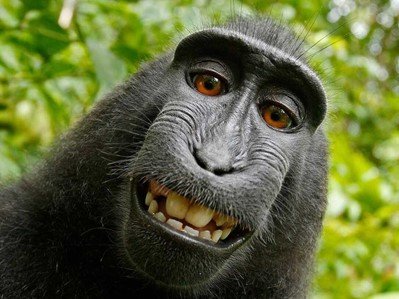
The Copyright Act, for its part, grants protection over “original works of authorship.” Mr. Thaler contends that the Copyright Act does not limit authorship to natural, human persons. The question then remains as to what does constitute “authorship” for the purposes of U.S. copyright law. If a court were to grant Mr. Thaler’s AI its copyrights, would the United States unknowingly be granting the right of authorship to all non-human entities? A similar case raised similar issues, namely a macaque monkey named Naruto, who took a “selfie” photograph. In that instance, the Ninth Circuit rejected the monkey’s (or, rather, a human with Naruto’s best interests at heart) quest to obtain copyright ownership over his selfie.
What’s next?
Throughout history, the question of an AI’s ability to create a work of authorship has not been an issue. Only recently have AI systems advanced to the point of being able to engage in the creative process without further human direction or interaction. Between 2002 and 2018, annual patent applications covering AI systems doubled from 30,000 to 60,000, with the overall share of patent applications that contain AI systems increasing from 9 percent to approximately 16 percent.
The outcome of Mr. Thaler’s lawsuits will have rippling effects on all creators who use AI in the course of authorship. With AI systems already being used to generate music, games, art, and prose, such works would be deemed devoid of copyright if the courts maintain that direct human involvement is essential for the creation of a work of authorship. While the courts should be extremely cautious in opening an unintended can of worms, it is clear that the status quo needs to change, to some degree, with the times. Should AI systems ultimately lose this battle in court, all works created by them could be used freely by anybody, despite the dramatic investments in AI systems that companies and individuals alike are contributing. This could end up having a chilling effect on the rate of progress in such markets.
As with most things in life, perhaps the answer is more complex than “sure, all AI-generated works are entitled to protection with the AI system as the proper author.” What is clear is that U.S. copyright law is beginning the end game of a game of chicken with the AI-driven economy of the future. The question of AI authorship is not one that is likely going away any time soon, save for a dramatic reworking of U.S. copyright law.
This post is general information, not legal advice for your situation. Talk to us about yours.